
Ask a neurodivergent person what they’re bad at, and you'll often get a long, detailed list. Ask what they’re great at, and things go quiet.
Many of us are acutely aware of what we think we’re rubbish at, and oblivious to what we’re brilliant at. So we spend our energy trying to fix what’s “wrong”, and very little amplifying what’s right.
But there’s a catch. Sometimes the thing you’re rubbish at and the thing you’re great at are the same thing.
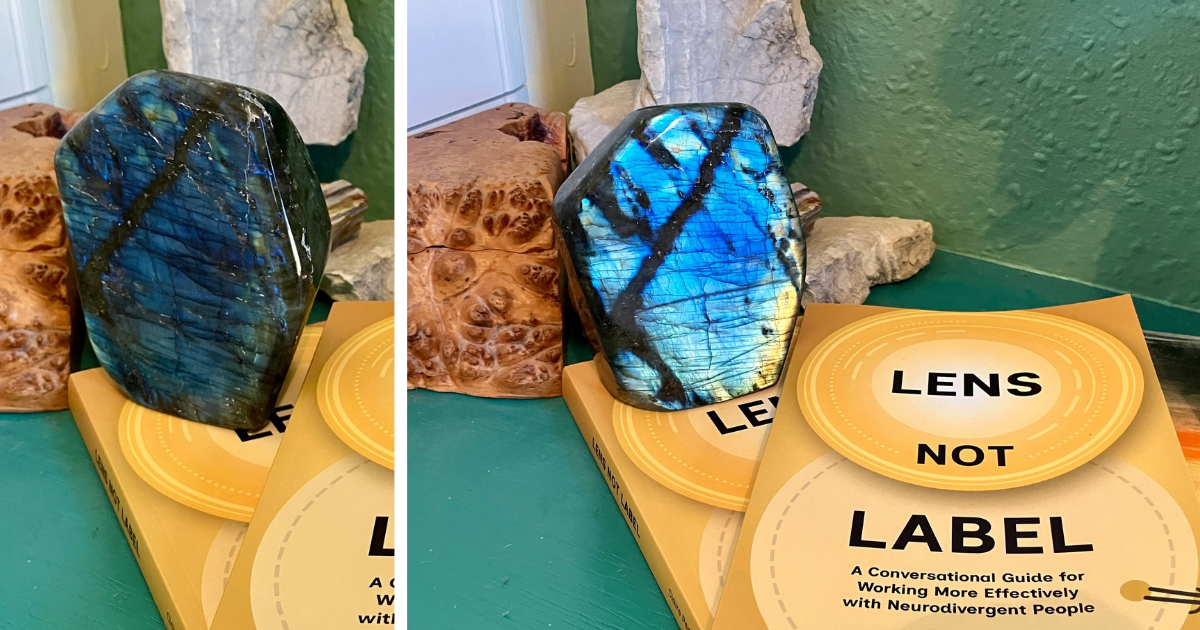
What looks dull from one angle shines from another.
A trait isn’t good or bad on its own. It can be helpful or harmful depending on the context. The expansive thinking that lets me get distracted is the same thinking that connects ideas nobody else thought to put together. Change the room, the task or the expectations, and the “problem” becomes a gift.
That’s true for you, and it’s true for the people you work with.
Try this
When you notice a trait causing friction, yours or someone else’s, ask: Where does this same trait help?
In your next 1:1, pair “What’s getting in the way?” with “When does this work really well for you?” You’ll learn as much from the second question as the first.
Before trying to change the person, look at the context. What small adjustment, like more structure, more flexibility or a quieter space, might let the strength show up more often?
A lens, not a label
A label like distractible tells you what someone isn’t doing. A lens helps you see what else is going on. When we look at people only through what’s hard for them, we miss what’s already strong, in them and in ourselves.
We wrote a whole book about having better conversations with neurodivergent people. Lens Not Label is out now on Kindle and in print.
